Actia CoolSave Desiccant Wheel Based AC Energy Saving Solution
In tropical climates like Indonesia, HVAC systems do more than just lower temperatures; they must also manage humidity.
Field data consistently shows that air conditioning accounts for 50–87% of a building’s total electricity bill in Indonesia—averaging 65% across 110 audited buildings—while HVAC systems are responsible for 74% of total operational emissions in commercial buildings. Actia Carbon offers a waste-heat or solar-powered desiccant wheel retrofit solution designed to drive energy savings and decarbonization.
Actia CoolSave helps decouple part of the dehumidification process from conventional cooling systems, creating opportunities to optimize HVAC energy consumption without the need to replace the entire air conditioning system.
In many commercial buildings, HVAC accounts for one of the largest shares of energy consumption.
A benchmarking study of 33 office buildings in Indonesia reported that HVAC systems contribute approximately 64.7% of total building energy consumption.
This figure highlights a key point:
Given the high energy consumption associated with HVAC, optimizing the air conditioning system offers significant potential for savings.
However, replacing the entire air conditioning system is not always the first course of action.
If the existing equipment is still viable, an HVAC retrofit can serve as an alternative to incrementally improve system performance.
AC Challenges in Tropical Climates: Heat and Humidity
Outdoor air in Indonesia has a high water vapor content.
When humid air enters an HVAC system, the air conditioner must perform two tasks:
cooling the air and reducing its moisture content.
The process of removing moisture is known as dehumidification or latent load control.
In facilities with strict relative humidity (RH) requirements or high moisture loads, this aspect presents a significant opportunity for energy optimization.
What Is a Desiccant Wheel?
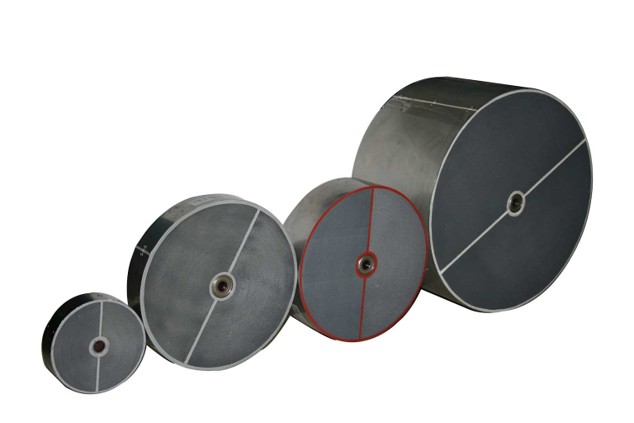
A desiccant wheel is a rotating dehumidification device that uses desiccant material to absorb water vapor from an airflow.
After the material absorbs moisture, the wheel is regenerated using heat so that it can be reused.
Unlike approaches that rely entirely on cooling coils for dehumidification, a desiccant system allows the moisture-removal process to be carried out specifically.
Humid air
Desiccant Wheel
Air with lower humidity
Existing AC System
Room air that better meets the target
This approach opens up opportunities to reduce the latent load on the cooling system.
How Does Actia CoolSave Work?
Actia CoolSave integrates a desiccant wheel with the facility’s existing HVAC system.
The heat source for desiccant regeneration can be drawn from energy available on-site, including:
waste heat,
boiler heat,
industrial process heat,
heat from specific equipment,
or solar thermal energy.
Through this approach, available thermal energy can be utilized as part of the dehumidification process.
It is not just about adding equipment.
We look at the entire system:
HVAC + humidity + heat source + controls + energy consumption + performance data.
HVAC
HUMIDITY
HEAT SOURCE
CONTROL
ENERGY CONSUMPTION
PERFORMANCE DATA
What Makes CoolSave Different?
Retrofitting, Not Automatic Replacement
HVAC systems that are still viable do not need to be immediately dismantled.
CoolSave is designed to evaluate the feasibility of integrating dehumidification technology into existing systems.
The final outcome is determined through an engineering assessment.
Utilizing Available Thermal Energy
If a facility has suitable waste heat, that source can be utilized for desiccant regeneration.
This creates opportunities for heat recovery and improved HVAC efficiency.
For locations lacking adequate waste heat, solar thermal or other heat sources can be considered.
Data-Driven Savings
We do not apply a single savings figure to all buildings.
Potential savings are influenced by:
HVAC capacity,
temperature conditions,
relative humidity,
latent load,
airflow,
operating hours,
equipment efficiency,
electricity rates,
and the regeneration heat source.
Therefore, the CoolSave business case begins with your facility’s data.
How Much Savings Can Be Achieved?
The answer varies for each facility.
Two buildings with identical air conditioning capacities do not necessarily share the same savings potential.
Differences in occupancy, relative humidity (RH), outdoor conditions, operating hours, and HVAC configurations can lead to varying results.
Therefore, Actia conducts an assessment to calculate:
Energy Baseline
What is the current energy consumption?
Latent Load
What is the magnitude of the moisture load that must be handled?
Heat Availability
Is there usable waste heat available?
Retrofit Potential
How can a desiccant wheel be integrated?
Financial Potential
What are the estimated savings, investment costs, and payback period?
Savings of up to 40% may be achievable under certain conditions, but this is not a guaranteed figure for every project.
From kWh to Rupiah
Energy savings only hold business significance when translated into reduced operating costs.
For illustration:
100,000 kWh in annual savings
assuming an electricity rate of:
Rp1,000/kWh
translates to approximately:
Rp100 million in annual energy savings.
Actual figures will, of course, depend on the specific tariff, operational profile, and facility measurement data.
For industrial customers, PLN tariffs vary by category and time period. Since tariffs are subject to change, project calculations should utilize the customer’s actual tariff at the time the business case is developed.
More Than Just Energy Savings
CoolSave for Energy Efficiency and Decarbonization
When HVAC electricity consumption decreases, energy consumption from the power grid can also be reduced.
This can form part of programs for:
energy efficiency,
carbon reduction,
sustainability,
ESG,
and decarbonization roadmaps.
CoolSave helps provide the data needed to link:
Energy baseline → Measurement → Energy savings → Estimated emission reductions
Emission calculations are performed based on project boundaries, methodologies, and relevant emission factors.
Monitoring Makes Savings Easier to Understand
Following the retrofit, system performance can be monitored via relevant parameters such as:
Energy
kWh
demand
operating hours
Air conditions
temperature
relative humidity
airflow
System performance
HVAC operating conditions
desiccant parameters
regeneration heat source
This data helps the engineering team determine whether the system is operating according to design and identify where opportunities for optimization still exist.
What Types of Facilities Should Consider CoolSave?
Industry & Manufacturing
Especially facilities with large-scale HVAC systems and process heat sources.
Opportunities: Energy efficiency + heat recovery.
Pharmaceuticals & Food Processing
Facilities requiring strict humidity control.
Opportunities: Dehumidification + RH control + HVAC optimization.
Hospitals & Laboratories
Areas requiring controlled air conditions and long operating hours.
Opportunities: Humidity management + energy optimization.
Hotels
Buildings with high HVAC loads and round-the-clock operations.
Opportunities: Dehumidification load reduction + energy cost optimization.
Office Buildings
Especially large buildings with dominant HVAC systems and long operating hours.
Opportunities: HVAC retrofitting + energy monitoring.
When Should You Consider CoolSave?
CoolSave is worth considering if your facility meets several of the following conditions:
High HVAC electricity consumption
Long operating hours for the air conditioning system
High moisture load
Strict Relative Humidity (RH) targets
Availability of waste heat
Space available for installation and duct integration
Existing HVAC system is still in good working condition
The company has energy reduction targets
The company is implementing ESG or decarbonization programs
Not every facility requires a desiccant wheel.
That is precisely why an assessment is the first step.
What Actia Does
1. Assessment
We assess the condition of the facility and the operating HVAC system.
Data available for analysis includes:
electricity consumption,
AC capacity,
temperature,
RH,
airflow,
operating hours,
and heat sources.
2. Energy & Humidity
We identify:
sensible load,
latent load,
dehumidification needs,
heat recovery opportunities,
as well as HVAC operating conditions.
3. Engineering Design
If the assessment results indicate promising potential, the design can be developed based on:
desiccant wheel capacity,
airflow,
regeneration temperature,
heat source,
heat exchanger,
ducting,
and control system.
4. Business Case
You gain an overview of:
estimated energy savings,
estimated electricity cost reductions,
investment requirements,
operational considerations,
and the estimated payback period.
5. Retrofit & Commissioning
Once the design is approved, the system is integrated with the existing facilities and commissioned.
6. Monitoring & Reporting
System performance can be monitored using energy data and operating parameters.
This data can serve as a basis for performance evaluation and the documentation of savings.
What Do You Get?
For companies wishing to determine the feasibility of a retrofit.
HVAC system review
Energy consumption analysis
Temperature & RH analysis
Latent load identification
Heat source identification
Preliminary energy savings
Investment estimate
Payback estimate
For facilities that already have a positive business case.
Engineering design
Desiccant wheel system
Heat source integration
Control system
Installation
Commissioning
CoolSave Energy & ESGFor companies requiring performance and sustainability data.
Energy baseline
Monitoring
Energy saving calculation
Emission reduction calculation
Reporting
MRV documentation
If third-party verification is required, the mechanism and verifier are determined based on the applicable standards or methodologies.
Frequently Asked Questions
Can Actia CoolSave be installed on existing air conditioning units?
It is worth considering. CoolSave is a retrofit approach designed to evaluate integration with existing HVAC systems. Feasibility is determined through an engineering assessment.
Is a desiccant wheel suitable for Indonesia?
Suitable for specific applications, particularly when humidity constitutes a significant portion of the HVAC load. Feasibility depends on the facility’s conditions.
Does a desiccant wheel use electricity?
The system requires energy for components such as fans, controls, and auxiliary equipment. However, the desiccant regeneration process can utilize available heat sources, thereby optimizing electrical energy consumption.
Can waste heat be utilized?
Yes, provided the temperature, capacity, continuity, and location of the heat source meet the regeneration requirements.
What if there is no waste heat?
Solar thermal or other heat sources can be considered as alternatives.
Does the air conditioner need to be replaced?
Not necessarily. CoolSave focuses on retrofit opportunities for existing systems that are still viable.
What percentage of electricity can be saved?
There is no universal figure. Potential savings are calculated based on actual facility data.
Is CoolSave suitable for hotels?
Yes, hotels with high HVAC loads and dehumidification requirements can be candidates for an assessment.
Is CoolSave suitable for factories?
Yes, especially if the factory has a significant HVAC load and a source of waste heat that can be utilized.
Does CoolSave support ESG programs?
Yes. Energy-saving data can be used as part of emission reduction calculations and documentation, provided appropriate methodologies and emission factors are applied.
Start by Understanding the Potential
Before investing funds in an HVAC retrofit, you need to know:
Is there an opportunity for savings?
What is its economic value?
Is a heat source available?
What is the required investment?
What is the estimated payback period?
That is why Actia begins the CoolSave process with an assessment, rather than with equipment sales.
Check Your Facility’s HVAC Efficiency Potential
If you face high HVAC electricity bills, humidity issues, or unutilized waste heat at your facility, CoolSave may be worth further analysis.
Submit your facility’s baseline data.
The Actia team can help evaluate: