
LCA Can Be Used for EPD is becoming increasingly important for businesses that want to expand their products into international markets.
Global customers, buyers, regulators, and supply-chain partners increasingly expect companies to provide transparent and measurable environmental information about their products.
One way to communicate this information is through an Environmental Product Declaration (EPD).
To develop an EPD, companies need environmental data based on a structured Life Cycle Assessment (LCA). In simple terms, LCA for EPD works because the LCA provides the environmental assessment that becomes the technical foundation of the declaration.
Table of Contents
- What Is Life Cycle Assessment?
- What Is an Environmental Product Declaration?
- How Does LCA for EPD Work?
- Steps to Develop an EPD Using LCA
- EPD Verification
- Benefits of LCA and EPD
- Industries That Can Use LCA and EPD
- Challenges and Solutions
What Is LCA? Understanding the Life Cycle of a Product
Life Cycle Assessment (LCA) is a methodology used to evaluate the environmental impacts associated with a product throughout its life cycle.
Depending on the scope of the study, this may include raw material extraction, manufacturing, transportation, distribution, product use, and end-of-life treatment.
LCA helps companies identify which stages of a product’s life cycle consume the most resources or contribute significantly to environmental impacts.
For businesses, this information can support better decisions regarding materials, production processes, energy efficiency, waste reduction, and product design.
A simple way to understand LCA is to think of it as a comprehensive environmental health check for a product.
Instead of looking only at what happens inside a factory, LCA examines environmental impacts across a defined product life cycle.
The principles and framework for LCA are described in ISO 14040, while more detailed requirements are addressed through related international standards.
What Is an Environmental Product Declaration (EPD)?
An Environmental Product Declaration (EPD) is a standardized document that communicates information about the environmental performance of a product.
Rather than simply claiming that a product is “green” or “environmentally friendly,” an EPD presents quantified environmental information based on established methodologies.
This makes environmental performance easier for customers, buyers, designers, project owners, and other stakeholders to evaluate.
EPDs can also make it easier to compare environmental information among products within the same category when they are developed according to consistent rules.
For companies operating in environmentally conscious markets, an EPD can strengthen transparency and support credible sustainability communication.
LCA Can Be Used for EPD: How Does the Relationship Work?
Yes, LCA for EPD is a fundamental part of EPD development.
An EPD requires environmental information derived from a Life Cycle Assessment performed according to the applicable standards and programme requirements.
The latest ISO 14025 provides principles and requirements for Environmental Product Declaration programmes and specifies the use of ISO 14040 and ISO 14044 for LCA in EPD development.
In practical terms, LCA performs the detailed environmental analysis, while the EPD communicates the relevant results in a standardized format.
A useful analogy is to think of LCA as the research behind a report.
The LCA collects and analyses the environmental data, while the EPD presents the relevant information in a structured form that can be communicated to the market.
This is why LCA for EPD provides a much stronger foundation than unsupported environmental claims.
7 Practical Steps to Use LCA for EPD Development
Developing an EPD is a structured process. Although specific requirements depend on the applicable EPD programme and Product Category Rules, the general process includes several important stages.
- Define the product and objective.
Determine which product will be assessed and why the EPD is being developed. - Identify the applicable Product Category Rules (PCR).
PCRs define specific calculation and reporting requirements for a particular product category. - Collect life-cycle data.
Gather information about raw materials, energy use, manufacturing, transportation, waste, and other relevant life-cycle activities. - Perform the Life Cycle Assessment.
Model and calculate the environmental impacts according to the applicable methodology and system boundaries. - Prepare the EPD document.
Translate the LCA results into the format required by the relevant EPD programme and PCR. - Complete the verification process.
The EPD and underlying data are reviewed according to the verification requirements of the selected programme. - Register and publish the EPD.
Once requirements are satisfied, the EPD can be published through the selected EPD programme.
Following these steps carefully helps ensure that LCA Can Be Used for EPD produces environmental information that is structured, transparent, and suitable for publication.
Why Product Category Rules Matter for LCA Can Be Used for EPD
Product Category Rules (PCRs) are an important part of the EPD development process.
They establish specific requirements for products within a particular category, helping ensure that environmental assessments are performed consistently.
PCRs can define elements such as system boundaries, functional or declared units, environmental indicators, data requirements, and reporting rules.
This is important because two companies could otherwise calculate similar products using completely different assumptions.
Using the appropriate PCR improves consistency and makes EPD information more meaningful within the relevant product category.
The International EPD System, for example, provides resources for EPD development and Product Category Rules.
LCA Can Be Used for EPD Verification: Building Credible Environmental Data
After an EPD has been prepared using LCA results, it must undergo the verification process required by the selected EPD programme before publication.
Verification evaluates whether the environmental information, LCA data, modelling assumptions, and supporting documentation comply with the applicable requirements.
Third-party verification is a common approach.
The International EPD System also provides other approved verification routes for eligible organizations and processes.
Companies can review the official International EPD System verification requirements for additional information.
A proper verification process increases confidence that the published environmental information is accurate, transparent, and based on an appropriate methodology.
7 Powerful Benefits of LCA Can Be Used for EPD
Using LCA Can Be Used for EPD can provide several strategic benefits for businesses.
- Greater environmental transparency.
Companies can communicate measurable environmental information instead of relying only on general sustainability claims. - Stronger credibility.
An EPD provides structured environmental information based on an established assessment methodology. - Better understanding of product impacts.
LCA helps identify environmental hotspots across the product life cycle. - Opportunities for product improvement.
Companies can identify opportunities to reduce energy use, emissions, waste, or resource consumption. - Support for international market access.
Environmental transparency can help companies respond to sustainability requirements from international customers and supply chains. - Better sustainability communication.
EPD information can support communication with customers, architects, project developers, procurement teams, and other stakeholders. - Competitive differentiation.
Companies with transparent environmental information can differentiate themselves in markets where sustainability performance matters.
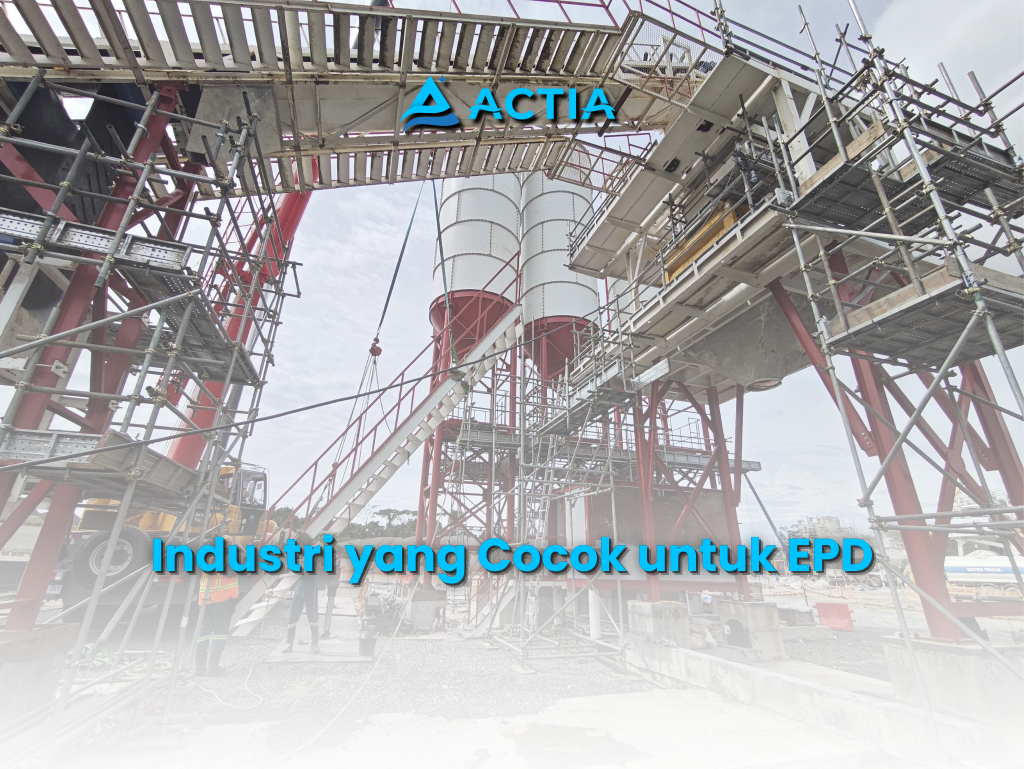
Which Industries LCA Can Be Used for EPD?
LCA Can Be Used for EPD can be applied across many product categories and industries.
One of the most established applications is the construction sector, where environmental product information is increasingly used to evaluate building materials.
However, LCA Can Be Used for EPD concepts can also be relevant to other industries, depending on the available EPD programme and applicable Product Category Rules.
Potential sectors include:
- Construction materials
- Cement and concrete
- Steel and metal products
- Insulation materials
- Furniture and wood products
- Packaging
- Textiles
- Food and beverage products
- Chemical products
- Manufactured goods
For export-oriented companies, environmental product information can also help respond to customers that increasingly include sustainability criteria in supplier evaluations.
Challenges and Solutions When Using LCA Can Be Used for EPD
Developing an LCA can require significant data collection.
Companies may need information about raw materials, suppliers, transportation, electricity consumption, fuel use, production volumes, waste, and other operational activities.
Data availability is therefore one of the most common challenges.
A practical solution is to establish a structured data collection system and clearly define responsibilities among production, procurement, sustainability, engineering, and supply-chain teams.
Another challenge is understanding the applicable methodology and PCR requirements.
Working with experienced LCA professionals can help companies determine appropriate system boundaries, data sources, modelling assumptions, and reporting requirements.
The verification and publication process can also involve additional costs.
However, businesses should evaluate these costs alongside potential benefits such as improved environmental transparency, better product information, and greater readiness for sustainability requirements in global markets.
LCA Can Be Used for EPD and International Market Expansion
For businesses planning international expansion, sustainability information is becoming increasingly relevant.
Global buyers may evaluate not only product quality and price, but also carbon emissions, resource efficiency, materials, and other environmental indicators.
Having structured environmental product information can therefore support conversations with international customers and supply-chain partners.
This is particularly relevant in sectors where procurement decisions increasingly include environmental criteria.
LCA Can Be Used for EPD gives companies a systematic way to measure environmental performance before communicating it externally.
LCA and EPD as Part of a Sustainable Business Strategy
LCA and EPD should not be viewed only as documentation exercises.
The environmental information generated during the process can also support internal improvement.
For example, an LCA may identify that a significant environmental impact comes from a particular raw material.
The company can then evaluate alternative materials, suppliers, production technologies, or logistics strategies.
This turns environmental assessment into a practical tool for product development and operational improvement.
Start Your LCA Can Be Used for EPD Journey With Actia
Companies beginning their LCA and EPD journey should first understand the applicable international standards, Product Category Rules, system boundaries, data requirements, and verification process.
Businesses can also work with experienced consultants to make the process more structured and efficient.
Actia Climate supports companies with greenhouse gas calculations, environmental assessments, sustainability initiatives, and Life Cycle Assessment studies.
If your company is preparing an EPD or wants to understand whether LCA is suitable for your product, you can also contact Actia regarding LCA and EPD services.
Conclusion: Why LCA Can Be Used for EPD Matters
LCA Can Be Used for EPD connects detailed environmental analysis with transparent product communication.
LCA evaluates environmental impacts across the defined product life cycle, while an EPD presents relevant results through a standardized environmental declaration.
Together, LCA and EPD can help companies improve environmental transparency, identify opportunities for product improvement, respond to customer expectations, and strengthen their readiness for international markets.
As sustainability requirements continue to influence global business, companies that understand their product impacts will be better prepared to compete in an increasingly environmentally conscious economy.
Start with LCA for EPD and turn environmental data into a stronger foundation for transparent, competitive, and sustainable products.