Understanding Building Energy Use Starts with the Most Dominant Areas
In many buildings, energy consumption often only becomes a genuine concern when electricity costs appear to be constantly rising. As long as rooms remain comfortable, activities proceed normally, and core building systems function well, energy usage is frequently viewed as acceptable. In reality, however, many buildings consume more energy than necessary—not because their systems are inherently poor, but because their operational patterns have never been fully analyzed.
As sustainability consultants, we observe that the greatest challenge for many companies is not merely high electricity consumption, but a lack of clarity regarding the building’s energy profile. Companies often possess adequate facilities, serviceable equipment, and even comprehensive monitoring data. Yet, these assets do not always provide answers to the most critical questions: where the largest share of energy is consumed, where potential energy leakage is most likely occurring, and which efficiency measures are the most realistic to implement first.
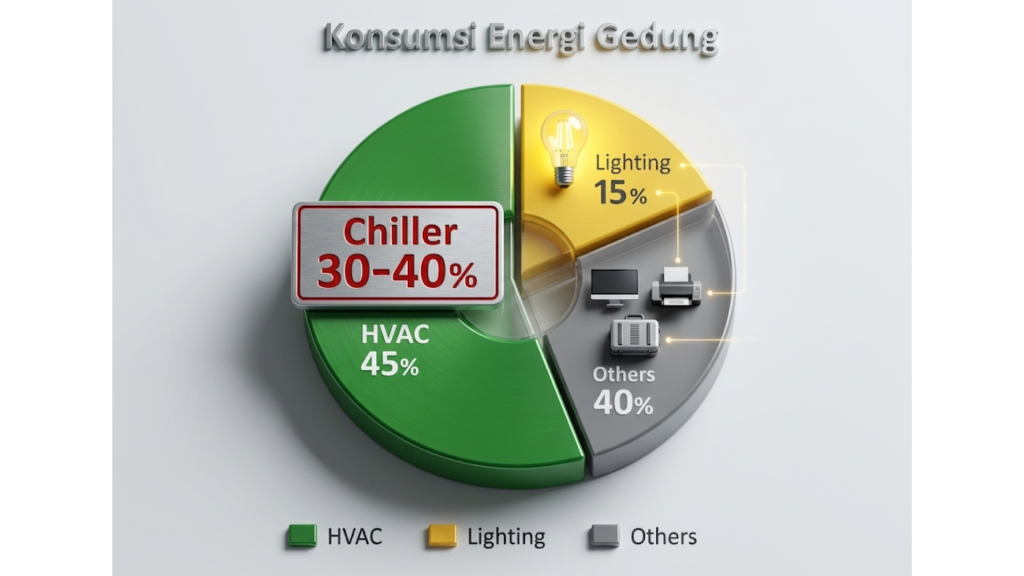
In many types of facilities—such as office buildings, hotels, hospitals, university campuses, shopping malls, factories, and data centers—cooling or HVAC systems are often among the largest contributors to energy consumption. Within these systems, the chiller plant frequently plays the most dominant role, as it operates continuously to maintain the temperature, comfort, and environmental stability of the building.
Chillers often represent a major, overlooked energy load
In office buildings, hotels, hospitals, campuses, shopping centers, factories, and data centers, cooling systems are frequently among the largest contributors to energy consumption. Within the broader HVAC system, the chiller plant often stands out as the most significant component, as it operates continuously to maintain the building’s temperature and stability.
Because they operate in the background of daily activities, chillers often escape major scrutiny as long as indoor conditions remain comfortable. Yet, this is precisely where significant energy loads often accumulate.
High energy consumption by chillers does not necessarily indicate faulty equipment. In many cases, the system remains viable and functions well. However, its operating patterns may not fully align with the building’s actual needs. Set points remain static, operating schedules are outdated, or the system fails to adjust to changes in occupancy, outdoor temperatures, and space usage patterns. Consequently, energy consumption consistently exceeds what is necessary; while the building remains comfortable, operating costs are not necessarily optimized.
Interpreting a Building’s Energy Map
Interpreting a building’s energy map goes beyond simply looking at monthly electricity consumption figures. What matters more is understanding how energy is utilized within the system, identifying the most dominant components, pinpointing when load spikes occur, and determining which areas warrant priority for further analysis.
With a clearer reading, companies can begin to answer three important questions.
True Efficiency Need Not Come at the Cost of Comfort
A common concern is the assumption that energy savings will compromise indoor comfort or disrupt operations. This concern is entirely valid, particularly for facilities that rely heavily on stable temperatures and environmental quality—such as hospitals, hotels, campuses, and data centers.
Therefore, the right approach is not based merely on reduction, but on precise adjustment. The focus is not simply on making a building “more economical,” but on aligning energy usage with actual needs. With this approach, efficiency and comfort need not be at odds; both can be maintained in tandem.
To us, effective energy management is management that respects the building’s specific function. Hospitals certainly cannot be treated the same way as office buildings. Hotels have different comfort standards than factories. Data centers require far greater stability than typical commercial buildings. Consequently, energy data must always be interpreted within the context of operations, rather than viewed solely as consumption figures.
Every building has a unique character, meaning energy evaluations cannot rely on a one-size-fits-all approach. We help companies assess building conditions within their specific operational context, ensuring that the resulting insights and recommendations are truly effective.
This approach is relevant for:
By understanding the function of the building, load patterns, and the comfort requirements of each facility, efficiency measures become more realistic and easier to direct.
Start by Gaining a Clearer Understanding of Building Energy Loads
Interpreting a building’s energy profile goes beyond simply reducing electricity consumption figures. It is the first step toward smarter, more measurable operations that align with corporate sustainability goals. Once a company understands where the heaviest loads lie, where inefficiencies are most likely to occur, and which “quick wins” are realistically achievable, efficiency decisions become clear and actionable rather than vague.
If your company wants to determine whether chillers are major contributors to your building’s energy consumption, identify where energy leaks are most likely to occur, and prioritize the most relevant initial steps, we are ready to assist you.