
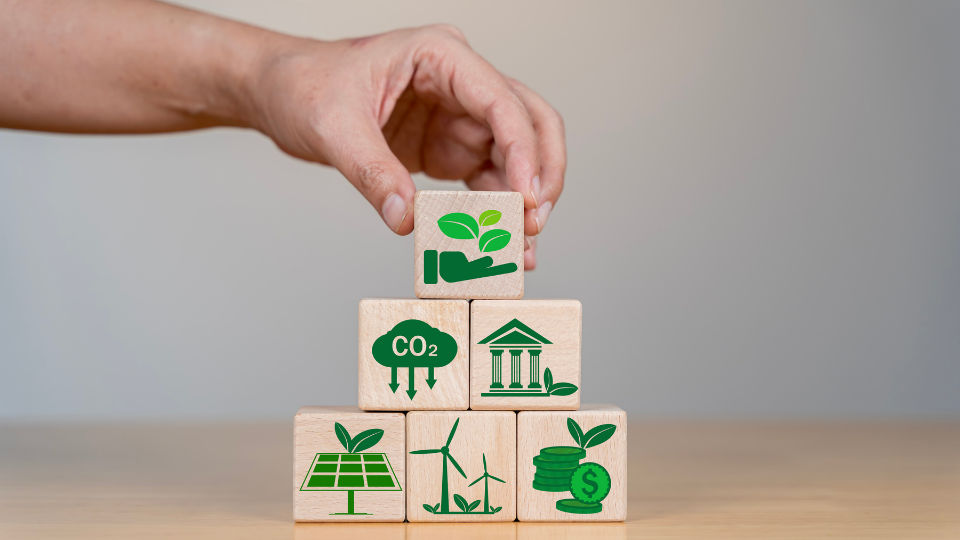
Product Carbon Footprint Calculation Services are professional services designed to help companies measure the total greenhouse gas (GHG) emissions generated throughout the life cycle of a product, from raw material extraction and manufacturing to distribution, use, and final disposal.
By applying recognized methodologies such as Life Cycle Assessment (LCA) and international environmental standards, businesses can identify major emission sources, improve operational efficiency, support ESG compliance, and strengthen their competitiveness in increasingly sustainability-conscious global markets.
Table of Contents
- Why Product Carbon Footprint Calculation Services Matter
- Understanding Life Cycle Assessment (LCA)
- Sustainability Reporting
- Developing a Decarbonization Strategy Through SBTi
- ESG Consulting and GHG Inventory
- Air Monitoring Technology and Aeroqual S500
- Carbon Economy Training
- Frequently Asked Questions
Why Product Carbon Footprint Calculation Services Matter in the Green Economy
Businesses today face growing pressure to transition toward greener and more sustainable operations. Climate change is no longer viewed solely as a corporate social responsibility issue. It has increasingly become a financial, regulatory, and operational consideration for companies operating in domestic and international markets.
Companies that do not conduct comprehensive carbon footprint assessments may face greater difficulty maintaining competitiveness, particularly as global markets increasingly introduce carbon-related regulations, reporting requirements, and emission-based trade policies.
In Indonesia, awareness of decarbonization continues to grow alongside the country’s long-term Net Zero Emission target.
One of the most important steps in any decarbonization journey is understanding where emissions originate. Without reliable data, emission reduction strategies can become little more than assumptions.
This is where Product Carbon Footprint Calculation Services become valuable. By examining every stage of production, companies can identify carbon emission hotspots and determine which processes require intervention.
This information allows investments in energy efficiency, renewable energy, alternative materials, and low-carbon technologies to be targeted more effectively.
Product Carbon Footprint Calculation Services and Life Cycle Assessment (LCA)
To produce credible environmental data, one of the most internationally recognized methodologies is Life Cycle Assessment (LCA).
LCA does not only evaluate emissions generated during manufacturing. It examines environmental impacts throughout a product’s entire value chain.
The assessment can include energy consumption, raw materials, transportation, production processes, packaging, product use, and end-of-life treatment.
This comprehensive approach is often described as a cradle-to-grave assessment because it evaluates a product from the extraction of raw materials until its final disposal.
When integrated into Product Carbon Footprint Calculation Services, LCA provides companies with a structured framework for identifying carbon-intensive activities throughout the product life cycle.
Companies can then use the results to communicate environmental information to consumers, investors, and other stakeholders more transparently.
For additional information about internationally recognized environmental management standards, companies can also refer to the International Organization for Standardization (ISO).
LCA data can also support management decisions such as replacing high-carbon raw materials, improving production efficiency, redesigning packaging, or optimizing logistics to reduce fossil fuel consumption.
Supporting Accountable Sustainability Reports
A Sustainability Report is an important communication instrument that allows companies to explain their environmental, social, and governance performance to investors and other stakeholders.
For companies required to prepare sustainability disclosures, reliable carbon data is an important component of environmental reporting.
Including results from Product Carbon Footprint Calculation Services can strengthen the environmental information presented in sustainability reports.
The calculation methodology, system boundaries, assumptions, emission factors, and reporting period should also be explained to improve transparency and data credibility.
Developing a Decarbonization Strategy Through SBTi
After determining a company’s emission profile, the next step is establishing measurable emission reduction targets.
SBTi advisory services can help companies develop science-based emission reduction targets aligned with climate science and long-term decarbonization objectives.
Businesses interested in science-based climate targets can learn more through the official Science Based Targets initiative.
Combining science-based targets with accurate Product Carbon Footprint Calculation Services helps companies develop decarbonization strategies based on measurable environmental data rather than general sustainability claims.
Product Carbon Footprint Calculation Services for ESG and Regulatory Readiness
Experienced ESG consultants in Indonesia can help companies understand increasingly complex environmental regulations and sustainability requirements.
Consulting services can support companies in preparing for carbon economic value mechanisms, carbon markets, sustainability reporting, and future carbon-related regulations.
Consultants may also assist companies with a comprehensive GHG Inventory covering Scope 1, Scope 2, and Scope 3 emissions.
Scope 1 includes direct emissions from sources owned or controlled by the company. Scope 2 covers indirect emissions associated with purchased electricity or energy. Scope 3 includes other indirect emissions occurring throughout the company’s value chain.
This inventory is important for companies seeking to develop Net Zero strategies, participate in carbon markets, or communicate environmental performance transparently.
Without properly documented emissions data, environmental claims can be difficult to verify. For this reason, professional Product Carbon Footprint Calculation Services can support companies in developing more transparent and traceable carbon information.
You can also explore environmental and carbon management solutions through Actia Climate.
Technology Supporting Carbon and Ambient Air Monitoring
Environmental management also depends on reliable monitoring technology. Companies may require accurate instruments to monitor workplace air quality and environmental conditions surrounding industrial facilities.
The Aeroqual S500 is a portable air quality monitoring instrument designed to measure various gas parameters using interchangeable sensor heads.
Real-time monitoring can help environmental teams obtain useful data for environmental management, research, occupational safety, and air quality assessment.
Although air quality monitoring and Product Carbon Footprint Calculation Services serve different analytical purposes, both can contribute to broader corporate environmental management programs.
Ambient Air Monitoring Equipment Sales and Rental
Companies may require ambient air monitoring equipment for environmental studies, internal research, compliance assessments, or periodic air quality monitoring.
For organizations that do not require permanent ownership of monitoring equipment, rental services can provide a practical alternative.
Businesses can choose between purchasing equipment for long-term monitoring programs or renting equipment for specific projects, audits, and research activities.
Calibration and appropriate instrument selection are essential to ensure that monitoring results remain reliable.
The Importance of Carbon Economy Training
The transition toward a low-carbon economy also requires employees and management teams with appropriate knowledge and capabilities.
Carbon economy training can help managers understand carbon trading mechanisms, carbon pricing, emission reduction strategies, and emerging green investment opportunities.
Training also allows internal teams to build the technical knowledge required to manage future decarbonization initiatives more independently.
When combined with Product Carbon Footprint Calculation Services, capacity building helps companies move from simply measuring emissions toward actively managing and reducing them.
Product Carbon Footprint as an Environmental Passport
A product carbon footprint can be compared to an environmental passport.
Just as a passport records a person’s international journey, a carbon footprint records the emissions associated with different stages of a product’s journey.
This journey can begin when raw materials are extracted, continue through manufacturing and packaging, and extend to transportation, customer use, and final disposal.
Products with higher emissions may face increasing challenges in markets where customers, regulators, and business partners demand greater environmental transparency.
Using Product Carbon Footprint Calculation Services is similar to auditing this environmental passport.
Once carbon-intensive stages have been identified, companies can implement a targeted “carbon diet” by reducing energy consumption, selecting lower-carbon materials, improving manufacturing efficiency, or optimizing logistics.
Over time, this process can help businesses reduce environmental impacts while supporting stronger sustainability performance and market access.
Integrating Air Monitoring and Workplace Environmental Management
High indoor CO2 concentrations, especially in enclosed offices and industrial environments, may indicate inadequate ventilation and negatively affect workplace comfort and employee well-being.
For this reason, appropriate air monitoring technologies can help companies continuously evaluate indoor environmental conditions.
Solutions available through Actia Climate can support companies in monitoring relevant environmental parameters.
CO2 ventilation systems can also be used to improve air circulation by removing indoor air and introducing fresh outdoor air according to monitoring requirements.
Combining indoor and ambient air monitoring provides companies with a broader understanding of environmental conditions across their operations.
Environmental monitoring programs can then complement initiatives such as Product Carbon Footprint Calculation Services, GHG inventories, sustainability reporting, and corporate decarbonization programs.
Additional environmental consulting services are also available through Jasa Konsultan Lingkungan.
Frequently Asked Questions About Product Carbon Footprint Calculation Services
What is the difference between a corporate carbon footprint and a product carbon footprint?
A corporate carbon footprint measures greenhouse gas emissions generated by an organization’s overall operations during a specific reporting period, usually one year.
A product carbon footprint focuses specifically on emissions associated with a particular product throughout its life cycle, from raw materials to end-of-life treatment.
Product Carbon Footprint Calculation Services provide more detailed information about the environmental impact associated with individual products or product categories.
Why does my company need a GHG Inventory?
A GHG Inventory provides a structured overview of a company’s greenhouse gas emission profile.
The information can support regulatory compliance, sustainability reporting, energy efficiency initiatives, carbon market participation, decarbonization planning, and discussions with environmentally focused investors.
What is Life Cycle Assessment and how does it support carbon calculations?
Life Cycle Assessment is a methodology used to evaluate the environmental impacts associated with different stages of a product’s life cycle.
Standards such as ISO 14040 and ISO 14044 provide internationally recognized frameworks for conducting LCA studies.
Within Product Carbon Footprint Calculation Services, LCA can be used to map energy, materials, transportation, processes, and emission sources throughout a product’s life cycle.
How can SBTi advisory services support my business?
SBTi advisory services can help companies develop emission reduction targets based on climate science and align their decarbonization strategies with internationally recognized climate objectives.
This approach can strengthen the credibility and structure of long-term corporate climate strategies.
What is the role of an ESG consultant for manufacturing companies?
An ESG consultant can provide strategic guidance on environmental, social, and governance issues.
For manufacturing companies, this may include energy assessments, environmental regulatory compliance, waste management, greenhouse gas inventories, decarbonization planning, and sustainability reporting.
Is the Aeroqual S500 suitable for industrial environments?
The Aeroqual S500 is a portable air quality monitoring instrument that can be used in different environments depending on the installed sensor.
Its interchangeable sensor system and data logging functionality can support occupational safety teams, laboratories, environmental departments, and R&D activities.
How do ambient air monitoring equipment rental and sales services work?
The process normally begins by determining which gas or environmental parameters need to be measured.
Companies can purchase equipment for long-term requirements or rent instruments for temporary monitoring projects, audits, or research programs.
Calibration may also be included to help maintain measurement accuracy.
What are the benefits of carbon economy training for management?
Carbon economy training provides management teams with knowledge about carbon pricing, carbon markets, carbon taxes, emission reduction initiatives, and potential opportunities associated with carbon credits.
This knowledge can help management evaluate how climate-related regulations and decarbonization programs may affect business operations and financial planning.
How can product carbon footprint results be integrated into a Sustainability Report?
Carbon footprint results can be included in the environmental performance section of a Sustainability Report.
Companies can compare results between reporting periods to demonstrate emission reduction progress.
The report should also explain the methodology, calculation boundaries, assumptions, and other relevant limitations to improve transparency.
What should companies do when indoor CO2 levels are too high?
Improving ventilation is one of the main solutions for reducing excessive indoor CO2 concentrations.
Ventilation equipment installed on walls or windows can help remove indoor air and introduce fresh outdoor air, while sensors can support continuous monitoring of indoor CO2 concentrations.
Choose Professional Product Carbon Footprint Calculation Services
Emission management is becoming an increasingly important strategic consideration for businesses seeking sustainable long-term growth.
Through professional Product Carbon Footprint Calculation Services, companies can better understand the greenhouse gas emissions associated with their products and identify realistic opportunities for emission reduction.
The resulting data can support operational efficiency, sustainability reporting, ESG programs, decarbonization planning, and more transparent environmental communication.
Developing a lower-carbon business is a long-term process that can create value for companies, investors, customers, employees, communities, and the environment.
PT Actia Bersama Sejahtera
PT Actia Bersama Sejahtera supports companies seeking to generate business value through emission reduction, environmental monitoring solutions, and greenhouse gas management.
Its GHG-related services include the Actia platform for greenhouse gas calculations, capacity building through training and advisory programs, and support for Net Zero Emission certification.
Services include carbon footprint calculations, corporate CO2 emission monitoring, emission reduction tracking, greenhouse gas reporting, Sustainability Report input, decarbonization strategy development, GHG inventories, and Product Carbon Footprint Calculation Services.
The company also provides environmental monitoring equipment sales and rental services.
The Aeroqual S500 is a portable ambient air monitoring instrument equipped with data logging functionality and designed for periodic environmental measurements, laboratories, and corporate R&D activities.
Indoor CO2 reduction solutions, including CO2 ventilation systems installed on walls or windows, are also available to help organizations maintain appropriate indoor environmental conditions.
Contact:
WhatsApp: 6281515788893
Jakarta Office:
Creya Coworking Space Kebon Jeruk
Jl. Lapangan Bola No. 5D, RT.7/RW.1,
Kebon Jeruk, West Jakarta,
Special Capital Region of Jakarta 11530.
Surabaya Office:
Office 2 – Urban Office – MERR
Jl. Dr. Ir. H. Soekarno No. 470, RT.02/RW.09,
Kedung Baruk, Rungkut,
Surabaya, East Java 60298.